Auto Tune To One Note
MIXING INQUIRIES!Yes you can tune one single note of a vocal track, here's how!#AutoTune #Garageband #Garagebandandbeyond. Auto Tune To One Note Online Choose the vocal tuning and pitch-correction tools, techniques, and workflow that will give your music the finished vibe you’re looking for. Aug 23, 2014 Microsoft OneNote is a free application available for Mac, PC, iPhone, iPad, Android (phones and tablets), and is. Most people confuse the Auto-tune term, software made by the Antares. The software is used by professionals to enhance their vocals and make them better. And auto-tuning is the act of pitch correction. As mentioned above, auto-tuning in logic Pro X can be done by using the Pitch Flex or pitch correction tool.
Using native elements to create Mind Map in OneNote 2016, 2013, 2010. Time Axis, All OneNote 138 Tags. A Mind Map Add-in for OneNote 2016, 2013, 2010. Disadvantages: This addin is similar to the Visio brainstorming, unlike other mind-mapping software. This addin is similar that you use pen to draw the mind map in OneNote. Auto Tune To One Note Online Choose the vocal tuning and pitch-correction tools, techniques, and workflow that will give your music the finished vibe you’re looking for. Aug 23, 2014 Microsoft OneNote is a free application available for Mac, PC, iPhone, iPad, Android (phones and tablets), and is also accessible online.
If you’re a beginner and looking for the Autotuner Program Beginner’s guide to Auto-Tuning then, this guide is just for you, so keep reading the guide. I hope you guys know that some of the well-known names in music are using an effect which is commonly known as Auto-Tune. Basically, Auto-Tune is used for correcting the pitch of a singer’s voice.
However, when you use it subtly, it will be effective for making a good singer sound even better. But, if you overuse it then, it will create problems. So here is a guide for you to learn how to start and begin Auto-Tuning in Logic Pro X. let’s see now in brief about Auto-Tune.
Contents
- 4 How To Correct Pitch With Flex Pitch?
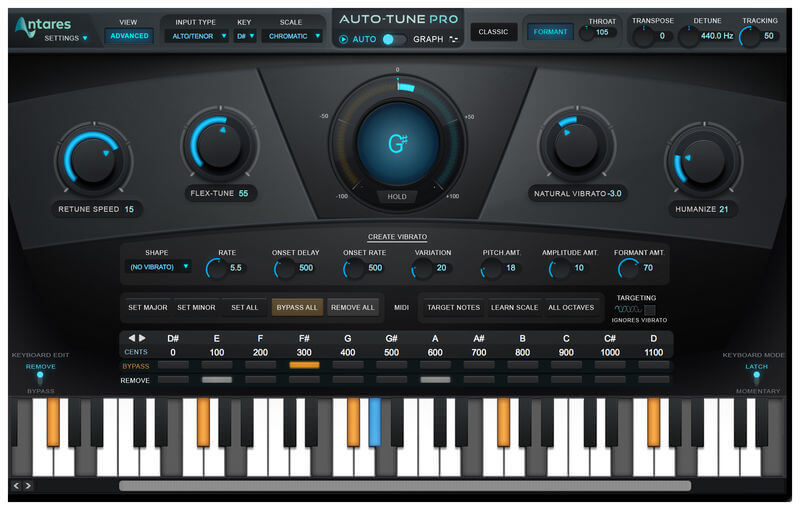
So what is the Auto-Tune?
/dances-with-wolves-free-movie-download.html. Auto-Tune is software which is created by Antareswhereas Pitch Correction is is electronic effects audio software to change theintonation of an audio signal. By doing so, the pitch will be noted from the equallytempered system without affecting other aspects of the sound. Usually,Transformation is used for increasing or decreasing the pitch of a recording.So now you have got an idea about it.
Who Uses Auto-Tune?
Mostly, the music industry uses Auto-Tune to maketheir sound more robotic and cool. Whereas a girl artist will use the Auto-Tuneat a very low level so that they can correct the slightest mistakes, and makegood vocals sound great.
How To Use Logic’s Pitch Correction Tool?
To make your vocals sound good more in-tune andon-key you need to use Logic’s built-in Pitch Correction tool. So have a lookat the following step to use this tool.
- You have to record or import the vocal track first that you want to correct into your project and trim it to length.
- On the left-hand side, you have to enable a new Audio FX which is name as Pitch Correction that will be within the Pitch category.
- Now, you will see a blue display that consists of a small keyboard, some buttons, and some sliders. First, you should set the scale clicking individual notes to enable and disable them.
- Otherwise, you can merely choose the Root and Scale from the drop-down lists as well.
- Now, you have to select depending on the vocal track which is Normal or Low. Generally, most male vocals are considered as Low whereas female vocals are considered as Normal.
- After that, you can play the track and think, so now probably you will see a slight improvement in the pitch of the vocalist. But to make the vocals sound even better, alter the Response and Detune sliders.
- Remember that lower the Response Time more noticeable the effect will be. So you should try and strike a balance between an in-tune vocal sound, and a robotic vocal sound.
- If the vocal track is consistently above or below the center point, by using the Correction Amount bar as a guide, you can change the Detune slider to accommodate.
- Most of the advanced users want to add waypoints on the tracks to increase or decrease these factors in the song. All in All, you will get a nice and in-tune vocal sound.
How To Correct Pitch With Flex Pitch?
/aimersoft-video-converter-ultimate-570-serial-key.html. Flex Pitch is one of the flexible and useful tools for correcting the pitch of a vocal track that is one note at a time. Even it allows users to drag and drop each note into the place where they would like to. So before we begin working with Flex Pitch, you need to disable the Pitch Correction tool.
You can click the power icon next to the item in the Audio FX list or click the up-down arrows next to the item then select No Plug-in. When it’s done, you can follow the steps down below.
Auto Tune To One Notes
- First, you have to click on the Show Flex button on the top left corner of the main editing area.
- On the drop-down list of modes, you have to select Flex Pitch then wait for a few seconds until it gets installed.
- Now, you will see some additional blue sections, so add to your vocal track by doing so, it will indicate that Flex Pitch is in use and how much work it’s doing for each note.
- After that, you can click on the Scissors icon and open the Track Editor then take a look at the keyboard as well as the notes placed by default.
- Now, you can merely drag the notes up and down so that it will make them more in-tune.
- So now, you have pitched your vocal track correctly using Flex Pitch.
In Conclusion
Often time’s people get confused with the term Auto-Tune as it is software, made by Antares. Antares Auto-Tune is used by well-known professionals in the music industry to enhance vocals with much more control.
Auto Tune To One Note 7 Pro
More:
Every singer uses it. Every singer uses it now, except for Neko Case. Except
for Neko Case and Nelly Furtado. Remember Nelly Furtado?
Everyone else uses Auto-Tune because if they don't they'll sound like
indie rock, not pop singers. Who now sound like rappers. Because of
Auto-Tune. Auto-Tune works by taking out the half-tones. By taking out
the half-tones you make humans sound like synthesizers. You can't
hear the shift between notes. Auto-Tune takes a note and pulls it apart
in time. Then Auto-Tune looks for moments. Moments when the singer is
not singing the main note. Moments when their voice wavers, perhaps.
Moments of imperfection. If perfection is the note. And Auto-Tune takes
those moments out. Auto-Tune very carefully slides out those moments
of imperfection. No. Auto-Tune doesn't care. It doesn't have to be careful
in order to do things right. Auto-Tune pulls out the imperfections and then
pushes the sound back together as though imperfections were never there.
As though the human voice could move from one note to the next with
no transition, like a synthesizer. As though the human voice could hold
one note forever without moments of imperfection. Milliseconds
of undetectable imperfection. And we can't, we humans. Humans can't
hear the difference unless the song wants us to. Cher wanted us to. T-Pain
wanted us to. Britney Spears wanted us to. Britney Spears is always trying
to prove to us that she is not a robot.
From Why We Live in the Dark Ages (Tavern Books, 2015). All rights reserved. Reprinted with the permission of the author.
On 'Auto Tune'
When I was in the final stages of editing Why We Live in the Dark Ages, a collection of poems about how we talk about science, history, and culture, Jeffrey Schultz, among other dear friends, had a look at the book.
'It needs a touch of 'Ceci n'est pas une pipe,' he said. I knew immediately what Jeff meant—that because the poems are so colloquial, so much about how language actually works and sounds, they needed a foil to underscore the fact that no matter how many ums and likes they use, they are still a performance of speech. Not transcription, but representation.
'Ceci n'est pas une pipe,' or 'This is not a pipe,' is the phrase written under the pipe in René Magritte's painting 'The Treachery of Images.' The initial joke is quick and pleasing: this is not a pipe, it's a representation of a pipe. The second joke, that there's no real reason, other than tradition as traced by etymology, for us to call that thing a pipe, is a little more unsettling. At least for folks like Laura Riding Jackson, for example, who wanted very much for words to have one stable, rational, somehow natural meaning, outside of fallible human usage.
While Riding Jackson was a bit over-the-top—dare I say performative, representative?—in her insistence upon individual, rational meaning, it's a common concern for most of us. How do we express exactly what we mean, particularly when we're trying to convey important information? Whether that information is emotional or practical, a description of an internal state or an external occurrence, when we look at how language really works, it's a wonder that we understand one another at all.
Unless you consider our generosity. The generosity of the listener, particularly of the listener who desires understanding and connection, is paramount in this equation. It's also paramount in the enjoyment of pop music. If the listener's aim is to dismiss pop music as vapid, boring, and willfully naive, that's easy enough to do.
If, however, the listener's aim is to hear the emotional reality in lyrics like 'I like doin' what she likes' and 'I will not let go 'til you tell me to,' we can begin to have a conversation about representations of consensual sex from Blake Shelton to Boyz II Men, instead of simply mocking grown women who like watermelon-scented candles and mandarin collars. Or we can begin to focus on why it not only doesn't matter how utterly interchangeable and banal those lyrics are, it's essential that they are so bland in order to allow the listener to be co-author, co-singer, to identify as both the speaker and the spoken to, as the object and the subject.
So what do 'Auto-Tune' and Auto-Tune mean about how we listen? I think it's lovely that until it became popularized by Cher and T-Pain, among other artists, as a way to underscore the instrumentality of the vocal line (and now all the kids love the robot voice!) Auto-Tune was almost unheard of, or unheard, by the average listener. It's usually considered a sort of shame on the singer's part, the need to use Auto-Tune. But do they need it? Is the star-making corporate model of today so different from the star-making corporate model the record industry has always used? Suggesting that somehow people becoming singers now wouldn't have made it in the past seems sentimental to me.
Rather, it's the assumption that pop fans want a clear, clean, perfect vocal that leads to the use of Auto-Tune. And 'Auto-Tune,' in its flatness, is meant to mimic that flattening effect of Auto-Tune, which can be detected only if the producer wants us to detect it. In this way, it's also commenting on the other poems in the book--that their at times irritating disorderliness, their exaggerated humanity, their hyperreality, is just as dissonant and estranging as the surreal in poetry, pop, and Magritte's other paintings.
But I think the fact that pop—and poetry—fans don't want to hear a clear, clean, perfect voice, that they want to hear the voice as instrument, whether that means unaltered and identifiable, or mechanized and transformed into something better than human, means that we're happiest, we're at our best, listening generously. That we hear the note, even if the singer doesn't hit the note. That we read the meaning, even if the meaning is confounded by ums and likes. That, ultimately, Britney Spears doesn't have to prove to us that she is not a robot.
Laura Cresté on “Poem for My Children Born During the Sixth Extinction”
Read Article